What Is a Wood Shake Roof?
Split Cedar, Certi-Label Grades, and What Atlanta Humidity Does to Them
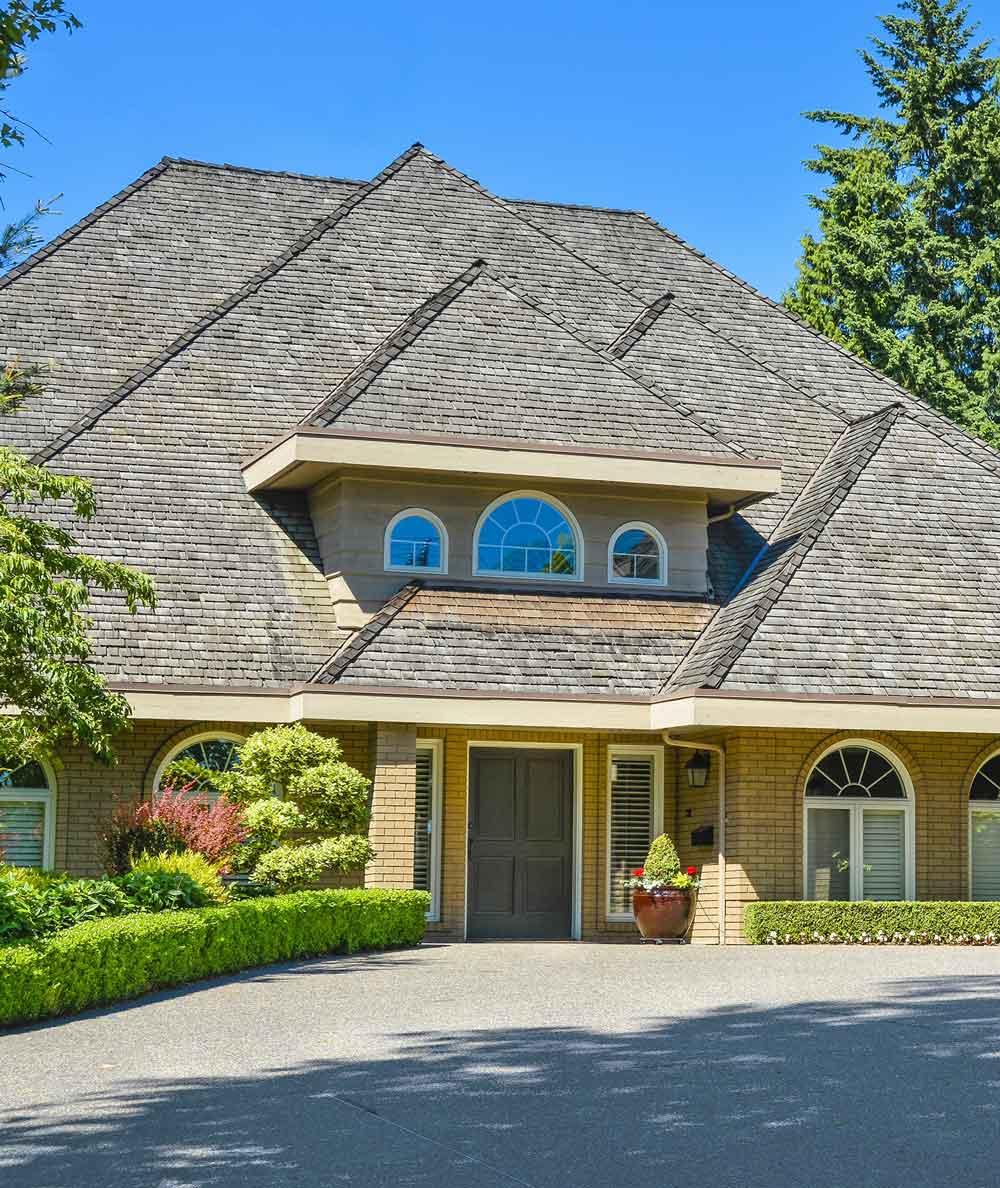
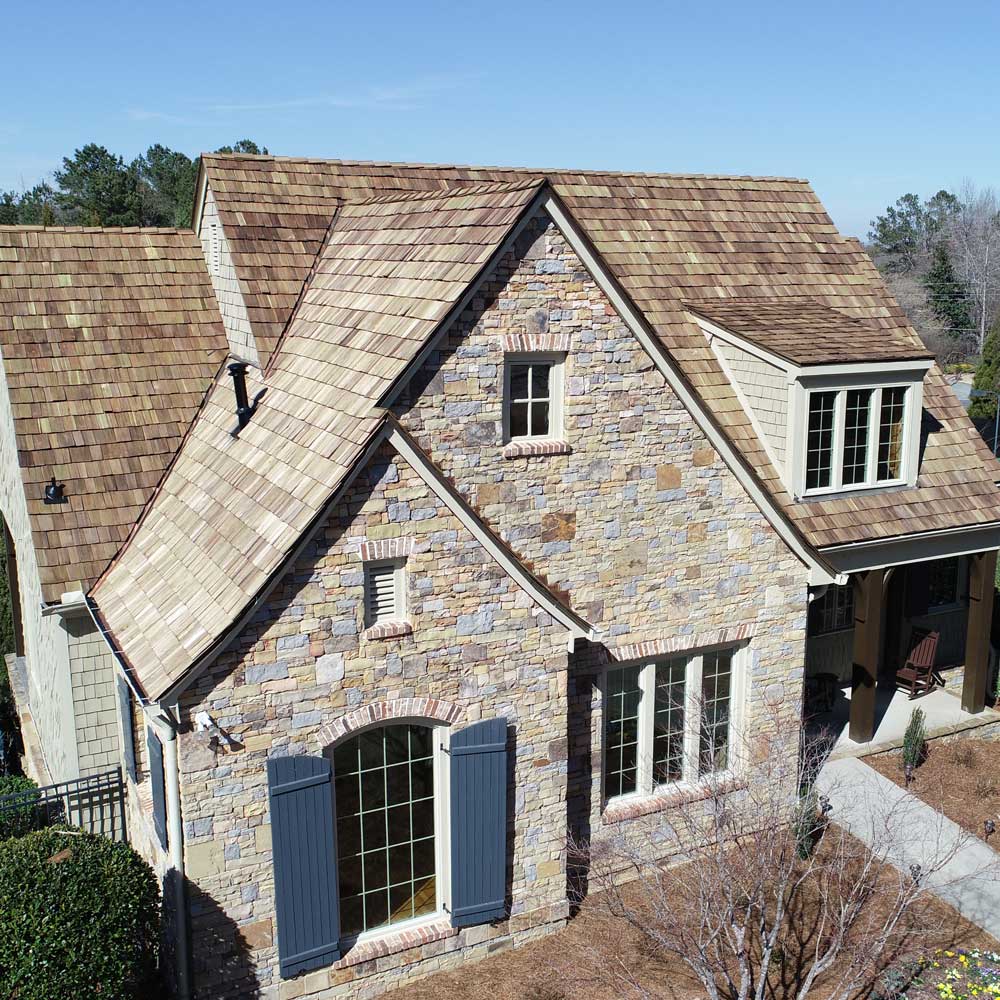
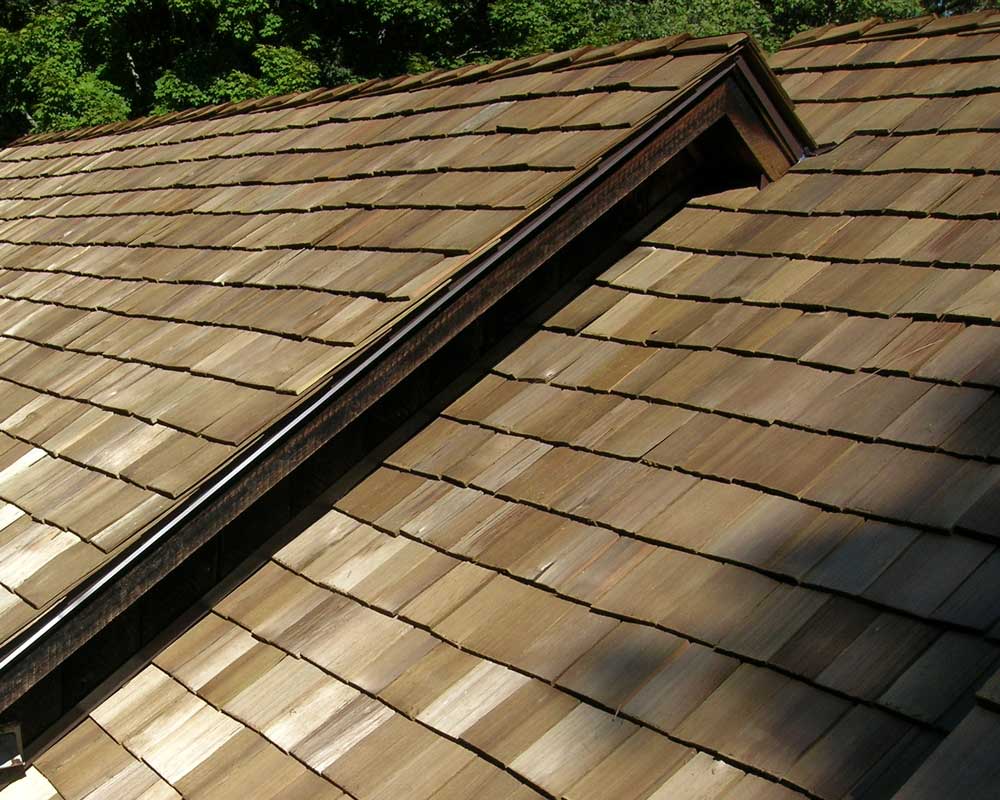
Wood shake roofing is split or sawn cedar installed in overlapping courses, and no two roofs come out alike. Thickness, width, and grain vary shake to shake, which is what produces the depth and shadow line that no asphalt product convincingly copies. You will find it across Sandy Springs, Marietta, and the older streets of Peachtree Corners, usually on homes where the architecture was designed around it.
Two species carry the market. Western Red Cedar is the standard, with natural oils that resist rot and insects. Alaskan Yellow Cedar is denser and more decay-resistant, and it typically appears on historic restorations and custom work.
Quality is graded by the Cedar Shake and Shingle Bureau under its Certi-Label program: Certi-Split for hand-split shakes, Certi-Sawn for tapersawn shakes, and Certigrade for sawn shingles, in Premium and Number 1 grades. Two pressure treatments matter here. Certi-Last impregnates preservatives for rot and decay resistance. Certi-Guard impregnates fire retardant. We specify both on Atlanta installations, and the reason is the next paragraph.
Cedar is organic, and Georgia is humid for most of the year. Cedar roofing has to dry between rain events or it rots from the underside, and rot that goes unnoticed long enough turns a roof repair into a roof replacement. That makes ventilation, spaced sheathing, and regular roof inspections non-negotiable in Georgia.


Wood Shake Roofing Products We Install
Natural Cedar and Synthetic Shake Alternatives
We install natural Certi-Label cedar alongside three synthetic wood shake lines. Which one fits depends on the look you want, the fire rating you need, and how much maintenance you are willing to take on.
Natural Cedar Shake and Shingle Certi-Label Western Red and Alaskan Yellow Cedar
We install Certi-Label graded cedar in hand-split, tapersawn, and sawn shingle profiles. On Atlanta projects we specify Certi-Last preservative treatment and Certi-Guard fire-retardant treatment, install over spaced sheathing or a ventilated underlayment system, and set the roof up so the wood can dry. Untreated cedar installed flat on solid decking is how cedar roofs fail early here.
Brava Cedar Shake Composite shake with through-tile Colorcast pigment
Brava molds its cedar shake in multiple widths and varied thicknesses, and ships from multiple production batches so the finished roof carries the irregularity a real shake roof has. Colorcast, Brava’s mineral-infusion process, runs pigment through the full tile so replacements match years later. Class 4 impact rating, 50-year limited warranty, and Class A or Class C fire ratings depending on the assembly.
DaVinci Roofscapes Composite shake molded from virgin polymer
DaVinci molds from virgin resin with UV and thermal stabilizers rather than recycled feedstock, a choice the company makes deliberately for batch consistency across a fifty-year product. All DaVinci roofing products carry a Class A fire rating. Their shake lines add a UL 2218 Class 4 impact rating and a 110 mph wind rating, with more than fifty standard colors that can be blended.
EcoStar Composite shake from post-industrial recycled rubber and plastic
EcoStar has built synthetic roofing from recycled EPDM rubber and TPO plastic since 1993. Traditional Shake is a three-eighths-inch standard shadow line; Niagara Shake is a three-quarter-inch enhanced shadow line; Empire and Aspen Blend offer mixed widths and thicknesses for a hand-split look. Tiles are cast from real cedar shakes, carry Class 4 impact resistance, and are available with fifty-year warranty coverage.
Signs Your Wood Shake Roof Needs Repair or Replacement
Cedar Tells You Before It Fails
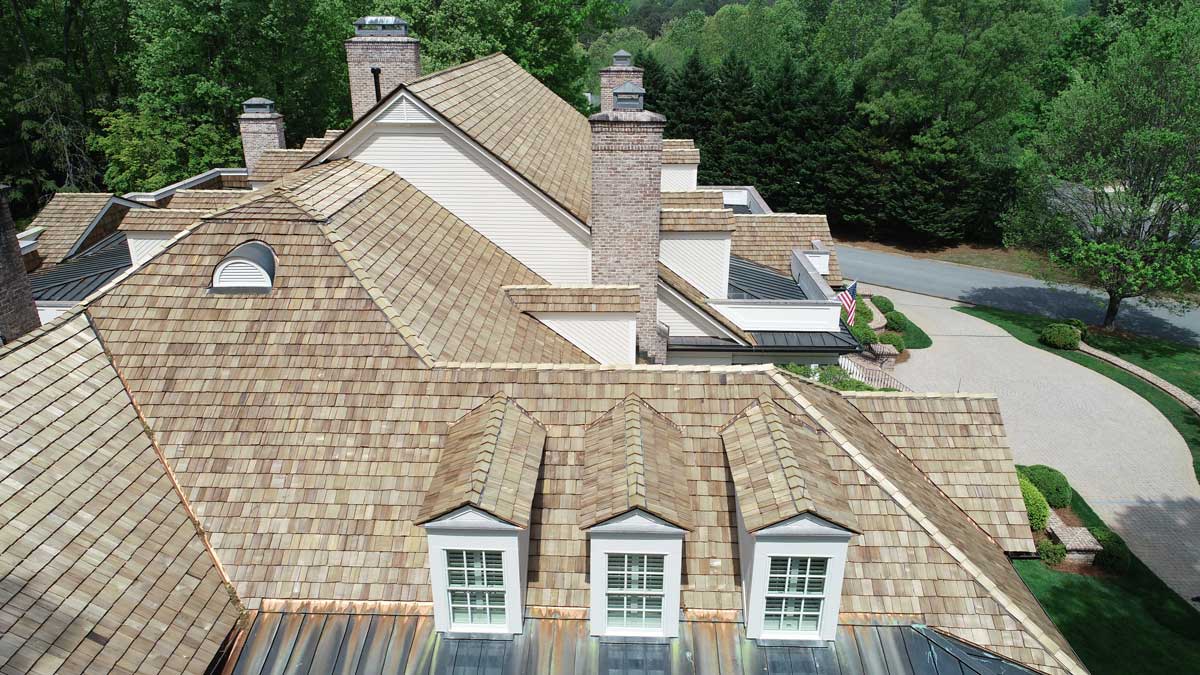
Wood gives more warning than most materials, but only if someone is looking. Cedar deteriorates from the underside as often as the top, so a roof that looks acceptable from the driveway can be well along. Watch for these:
What Is Synthetic Wood Shake Roofing?
Molded Polymer Tiles Cast From Real Cedar
Synthetic wood shake, also sold as composite shake, is not wood at all. It is a molded polymer tile cast from real cedar shakes, which is why the grain and split texture read as authentic from the ground.
Manufacturers split into two camps on what goes into the polymer. DaVinci molds from virgin resin. Brava and EcoStar mold from recycled polymer, with EcoStar working from post-industrial rubber and plastic. Either way, the base material gets UV and thermal stabilizers to hold color and handle heat cycling, a fire retardant, and pigment worked through the tile body rather than applied as a surface coating.
The practical difference shows up in how the roof lives on your house. Composite does not absorb moisture, so it does not rot from the underside, hold mold, cup, or split the way cedar does in Georgia humidity. That removes the drying requirement, which means it installs over standard solid decking instead of spaced sheathing, and it drops the cleaning and treatment cycle entirely. Weight runs closer to asphalt shingle than to slate, so structural reinforcement is rarely part of the conversation.
The honest trade-off is that composite does not age the way wood does. Cedar weathers into a silver-gray patina. A composite roof looks at year thirty roughly the way it looked at year one, which is the point for some owners and the disqualifier for others.
Wood Shake Roof vs. Wood Shingles
Same Cedar, Different Cut
Wood shake roof shingles come in two forms, and both are cedar. The difference is how the wood is separated from the block, and that single choice drives appearance, thickness, cost, and service life.
| Wood Shakes | Wood Shingles | |
|---|---|---|
| How they are made | Hand-split or tapersawn from a block | Sawn on both faces |
| Appearance | Rough, irregular, heavy shadow line | Uniform, smooth, tapered |
| Thickness | Thicker at the butt | Thinner throughout |
| Certi-Label grade | Certi-Split, Certi-Sawn | Certigrade |
| Architectural fit | Rustic, Craftsman, mountain, lodge | Colonial, Cape Cod, Victorian, Shingle Style |
| Weathering | Thicker profile erodes more slowly | Erodes faster at the same exposure |
| Maintenance | Higher; more surface texture holds debris | Lower; sheds debris more readily |
Why We Install Brava, DaVinci, and EcoStar
The Fire Rating Is Usually the Deciding Factor
Here is the part most cedar pages leave out. Untreated wood shakes carry no fire rating at all. Certi-Guard pressure treatment brings cedar to Class B or Class C, and a Class A wood roof is only achievable as a component system, meaning Class B treated shakes installed over a rated cap sheet. Synthetic shake reaches Class A on its own.
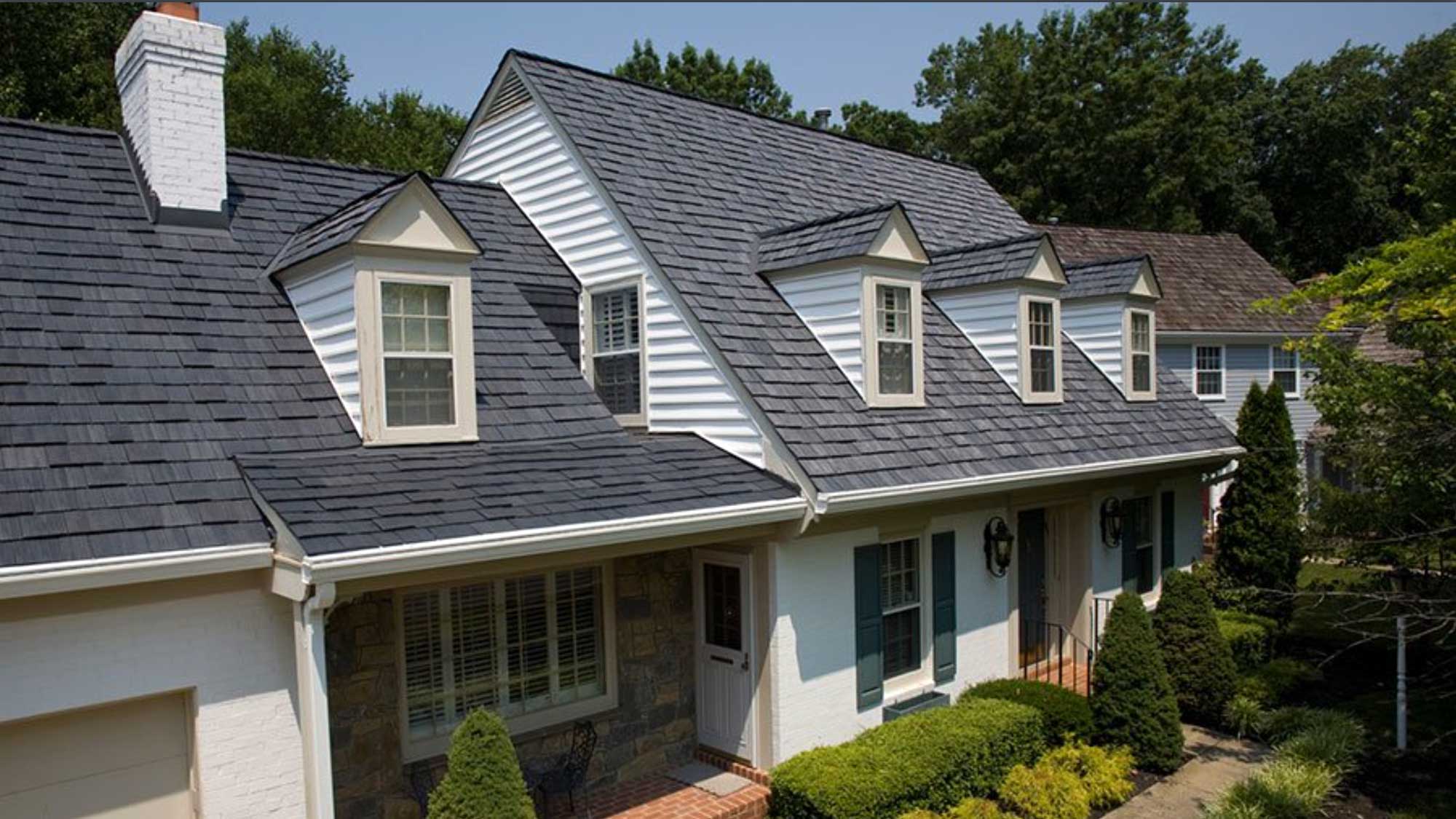
That gap is why we carry three composite lines alongside natural cedar. DaVinci uses virgin resin and argues that variability in recycled feedstock undermines a fifty-year product. EcoStar takes the opposite position and builds from up to eighty percent post-industrial recycled material, which suits projects chasing sustainability credit. Brava’s edge is Colorcast, its through-tile pigment, which matters most on roofs that will need repairs decades out.
None of them need the maintenance cycle cedar needs, and all of them install on standard decking. If the look is what you want and the upkeep is not, that is the conversation. If you want actual wood, we will tell you honestly what Atlanta will do to it.
Wood Shake Roofing FAQs
Common Questions From Atlanta Homeowners
Why Choose KTM Roofing for Wood Shake
Raising Roofing Standards in Atlanta Since 1984
Most Atlanta roofers will sell you a cedar roof. Fewer will tell you what the Georgia climate does to one, and fewer still will build the ventilation detail that decides whether it lasts twenty years or thirty.
Tim McLoughlin founded KTM Roofing on specialty materials in 1984, and cedar has been part of the work since the beginning. Our wood roofing runs across Peachtree Corners, North Atlanta, and the surrounding metro, in both hand-split shake and sawn shingle. We also install slate, tile, metal, and asphalt, which means we have no reason to talk you into cedar if your roof, your budget, or your maintenance appetite points elsewhere.
You get a written estimate before anything starts, an honest read on what the material will do here, and an invoice that arrives after the work is finished.