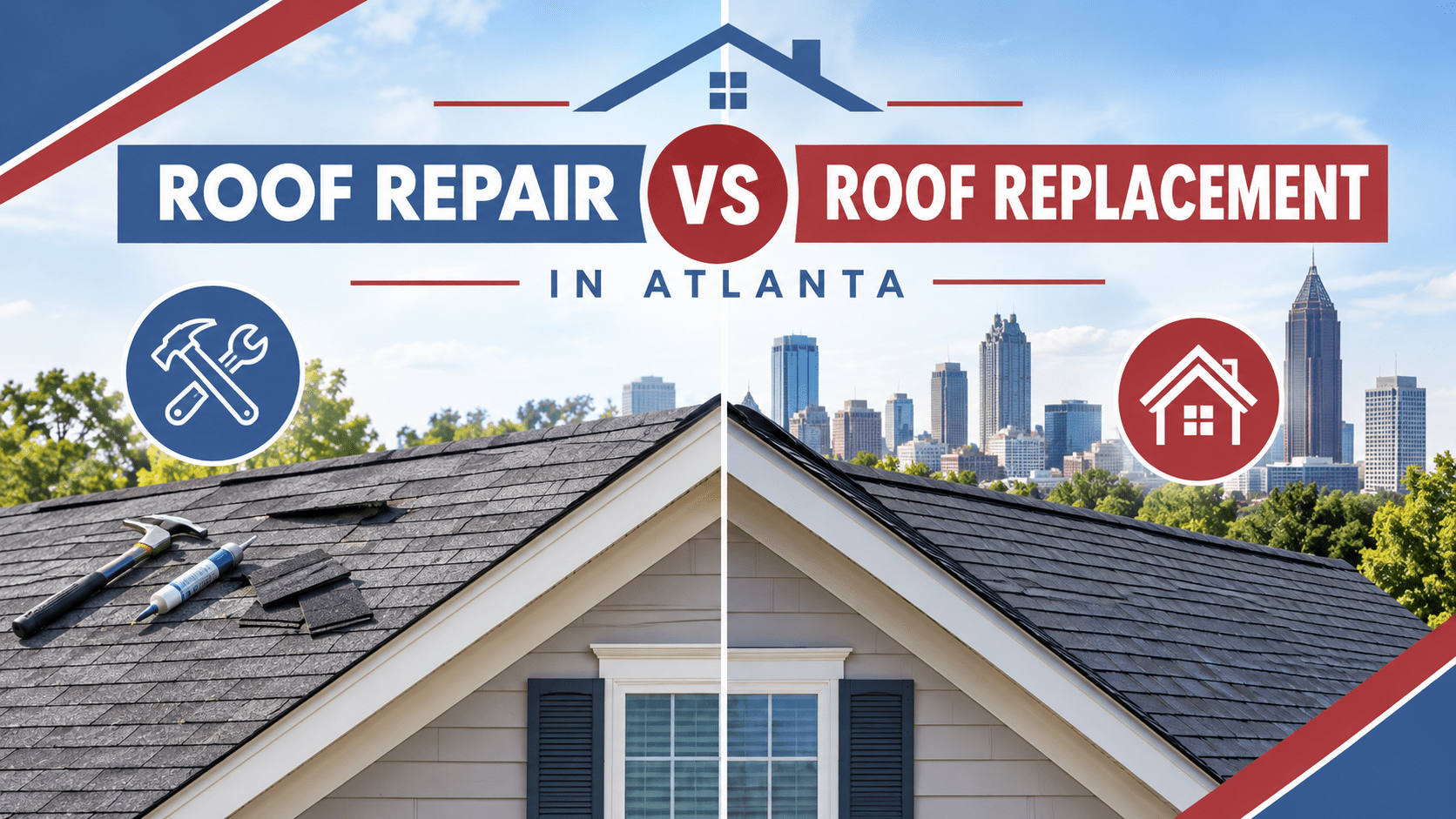
An Atlanta Homeowner’s Guide to Making the Call
A stain spreads across the ceiling after a July thunderstorm. A few shingles turn up in the yard after a windy night in Decatur. A home inspector in Marietta flags the roof as near the end of its life. Each moment leads to the same question: should you repair or replace your roof?
KTM Roofing has repaired and replaced roofs across metro Atlanta since 1984. Below are the checks our crews use, the terms you’ll see on a proposal, and the questions to ask before you sign.
The Short Answer
Repair when the damage sits in one spot and the rest of the roof has good years left. Replace when the wear is widespread, leaks keep coming back, the deck is damaged, or the roof is near the end of its life. The repair vs. replacement decision comes down to four facts: age, how far the damage reaches, deck condition, and roofing material.
Your Five-Step Roof Check
Stay on the ground and in the attic for these checks. Walking on a roof is a job for a trained crew with proper safety gear.
- Find the roof’s age. Check your closing paperwork, an old inspection report, or records from the previous owner. Most asphalt shingle roofs last roughly 20 to 30 years, while tile and slate can last 50 years or more.
- Walk the yard. Look for missing, curled, or cracked shingles and any dip in the roofline. After a storm, check around your downspouts for sand-like granules, and look for dents in metal vents and gutters.
- Check the attic. On a dry day, use a flashlight to look for water stains on the roof deck, damp insulation, or daylight through the boards. Any of these points to damage beyond the shingles.
- Look inside. Note ceiling stains, peeling paint near the roofline, and rising energy bills. Stains under one chimney or vent suggest a single leak point. Stains in several rooms suggest a wider problem.
- Count past repairs. A single repair after a storm is routine upkeep. Repeat visits for new leaks on an aging roof mean the whole system is wearing out.
Want a professional set of eyes on your roof?
KTM Roofing starts every repair with a full inspection, attic included. You get a written proposal with itemized pricing. Schedule an appointment today!
Signs a Repair Will Do the Job
- Damage limited to one area. Wind can tear shingles along one slope while the rest of the roof stays tight. Replacing those shingles restores protection without disturbing the sound sections.
- A failed pipe boot, vent, or flashing. These are common leak points. Fixing the component stops the leak at its source.
- A solid deck. Dry, firm decking gives a repair a sound base to hold. It’s a strong sign the roof has life left.
- A localized leak on slate or tile. A leak can come from worn flashing or underlayment while the slate or tile itself is fine. Broken pieces can be replaced one at a time.
When to Replace a Roof vs. Repair It
- Widespread wear. Curling, cracking, and bald patches on several slopes mean the shingles are aging as a group. Patching one area won’t slow the rest.
- Repeat leaks. Several repairs in a few years means each fix holds while the roof around it declines.
- Deck damage. A sagging roofline or daylight in the attic means water or age has reached the wood. A full tear-off gives the crew access to replace it.
- Hail damage across the roof. Hail knocks loose granules and bruises shingles. When that covers most of the roof, the shingles lose years of life even before a leak appears.
- A roof near the end of its life. A repair stops today’s leak. But the money goes into a system with limited years left.
Roof Repair vs. Roof Replacement in Atlanta: How They Compare
| Factor | Roof Repair | Roof Replacement |
|---|---|---|
| Best fit | Localized damage on a roof with good life left | Widespread wear, repeat leaks, deck damage, or an aging roof |
| Scope of work | Damaged shingles, flashing, pipe boots, vents, or individual slates and tiles | Old roofing removed to the deck, deck repaired as needed, new roof installed |
| Deck inspection | Limited to the repair area | The full deck is exposed and checked |
| Warranty | Coverage on the repaired work; get terms in writing | Manufacturer warranty plus KTM’s written, transferable workmanship warranty |
| Long-term outlook | Buys time while the rest of the roof ages | Resets the clock on the entire roof |
What Your Roofing Material Changes
Specialty roofs need a crew that knows the material before anyone can make a fair repair vs. replacement call.
- Asphalt shingles. Shingles, boots, and flashing can be replaced individually. Age and widespread wear drive most replacement decisions.
- Slate and clay tile. These can last 50 years or more, so a flashing problem rarely justifies a tear-off. When one does reach the end of its life, building code doesn’t allow a new covering over it. The old roof comes off.
- Wood shake. Rot in a few spots can be repaired. Rot across the roof points toward replacement, and composite shake from manufacturers like Brava and DaVinci gives you the cedar look with less upkeep.
- Metal. Seams, fasteners, and flashing are common weak points. They can often be repaired without replacing panels.
KTM Roofing has worked with slate, tile, and wood shake since 1984, including the slate roof on Decatur City Hall and the clay tile roof at East Lake Golf Club.
Storm Damage and Insurance
Atlanta’s frequent thunderstorms can tip the repair vs. replacement decision quickly. Hail damage that looks minor from the driveway can still shorten your roof’s life. If a storm caused the damage, coverage depends on your policy, the cause of the damage, and your adjuster’s findings. Review your policy or call your insurer before you file.
Be wary of crews that knock on doors after a storm, push for a quick signature, or ask for full payment upfront.
Roofing Terms You’ll See on a Proposal
- Deck. The wood boards or panels under your roofing. A sound deck supports a repair, and a damaged one usually means a tear-off.
- Underlayment. A water-resistant layer between the deck and the roofing. It’s backup protection if water gets past the surface.
- Flashing. Metal that seals joints at chimneys, walls, skylights, and valleys. Failed flashing is a common leak source and is usually replaceable on its own.
- Tear-off. Removing old roofing down to the deck before a new roof goes on. It lets the crew inspect and repair the entire deck.
- Overlay. New roofing installed over an existing layer. Building code limits when it’s allowed (see the FAQ).
What a Thorough Inspection Should Cover
A good inspection looks at the whole roof system, not just the spot that’s leaking. That means every slope, plus flashing, pipe boots, vents, gutters, and the attic. At KTM Roofing, it ends with a written, itemized proposal.
Questions to Ask Any Roofer Before You Sign
- Is the estimate written and itemized? It should list the scope of work, materials, and cost, so you can compare roofers side by side.
- Can I see proof of licensing and insurance? Ask for general liability and workers’ compensation coverage. Both protect you if something goes wrong during the job.
- What warranties come with the work? Get both the manufacturer’s warranty and the roofer’s workmanship warranty in writing.
- Where is your office, and when is payment due? A local office means the roofer will be around later. Be cautious of anyone asking for full payment before work begins.
Weighing the Cost Over Time
A repair costs less today. A replacement costs more today but resets the clock. When you weigh repair vs. replacement, compare what you’ll spend over the next several years. Roof size, pitch, material, access, and deck repairs all shape a replacement’s price. KTM Roofing offers financing through a third-party lender for qualified borrowers.
Should I Repair or Replace My Roof? Atlanta FAQs
Get a Clear Answer on Your Roof
Some roofs need a new pipe boot. Some need a new roof. KTM Roofing serves Atlanta, Alpharetta, Marietta, Sandy Springs, Decatur, Peachtree Corners, and Stockbridge from offices in Stockbridge and North Atlanta. Schedule a consultation, and we’ll walk you through whether to repair or replace your roof before you commit to anything.